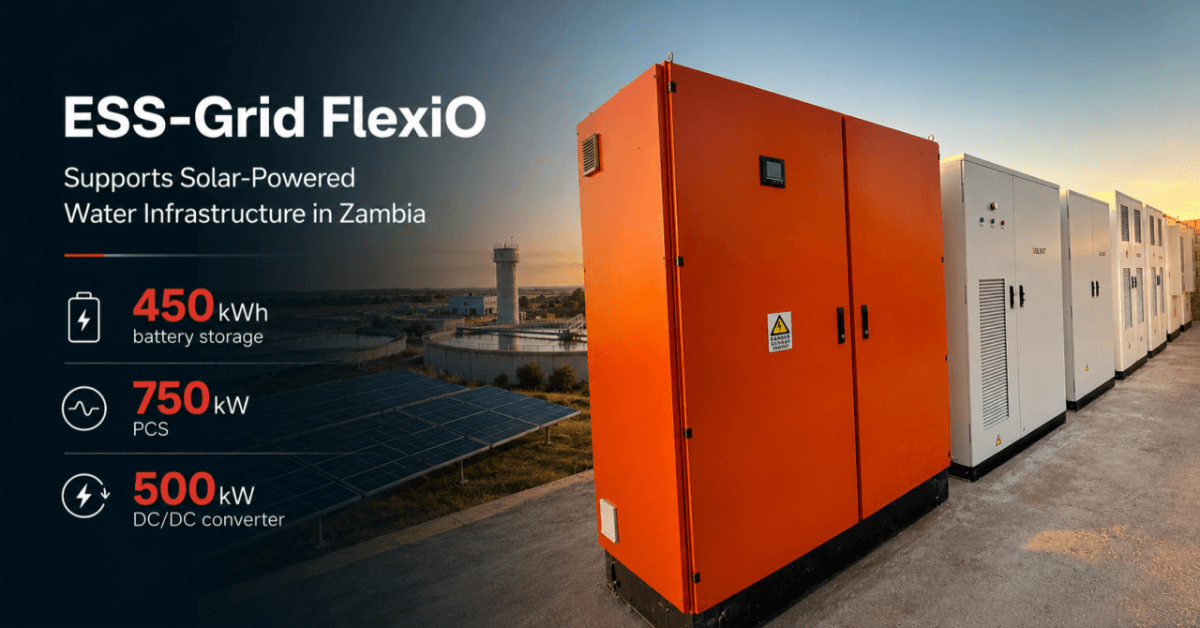
L85 Water Pumping Points — Mungwi & Sopelo Sites, Lusaka West, Chilanga District, Zambia
| Application Type | Water Pump Station (grid-tied, dual-site) with excess generation exported to the utility grid |
| Project Size | 2 systems, each 450 kWh battery energy storage / 750 kW PCS / 500 kW DC-DC — PV: 945 x 585 W panels (552.825 kWp) per site |
| Location | L85 Water Pumping Points, Lusaka West, Chilanga District, Lusaka, Zambia |
| Project Owner | Kiyona Energy Limited |
| Technology Platform | BSLBATT ESS-Grid FlexiO, supplied by Get Off Grid |
Overview
Get Off Grid Zambia supplied the BSLBATT ESS-Grid FlexiO battery energy storage and power conversion platform for two solar PV installations at the L85 Water Pumping Points in Lusaka West, Zambia.
The two sites, Mungwi and Sopelo, are located several kilometres apart within the L85 (Apollo) military settlement area. Each site has its own boreholes, water pumps and reservoir infrastructure that support the settlement’s water supply.
The BSLBATT FlexiO systems were designed for a grid-tied application, with solar generation supplying the pump stations, battery storage providing stability during sudden changes in solar output, and surplus generation exported to the utility grid. The ESS is primarily used to manage short-term fluctuations in solar generation rather than provide extended overnight backup.
The project provides a practical application of battery energy storage for critical water infrastructure, where maintaining stable power to the pumps is essential to maintaining a reliable water supply.
The Sites
Mungwi Site
Mungwi houses the boreholes, water pumps and reservoir that form the upstream part of the water supply system. Water is pumped from Mungwi to Sopelo for onward distribution, making reliable power to the pumps critical to maintaining the supply chain.
Sopelo Site
Located within a Zambia National Service (ZNS) camp, Sopelo receives water from Mungwi and distributes it to the settlement. Reliable pump operation is therefore essential to maintaining water supply to residents.
Although several kilometres apart, both sites use the same system architecture and equipment platform, simplifying maintenance, spares and operator training.
Client Challenge
The sites have access to the utility grid, but the supply is not fully reliable. Solar generation also varies throughout the day, with fast-moving cloud cover capable of causing sudden drops in PV output.
Because the water pumps are motor loads, sudden changes in supply can cause voltage disturbances or pump trips, interrupting water delivery. At Mungwi, an interruption can also affect Sopelo, which relies on water pumped from the upstream site.
The challenge was to integrate solar generation without introducing additional instability to the pump stations. Battery energy storage was therefore required to buffer short-term fluctuations in solar output and maintain a stable supply to the pumps.
Project Objectives
- Run the Mungwi and Sopelo pump stations from solar generation, reducing reliance on grid-supplied energy for day-to-day pumping.
- Maintain pump stability through sudden drops in solar output, without the pumps experiencing the voltage and frequency disturbance that direct PV-to-load supply would otherwise cause.
- Export surplus solar generation to the utility grid rather than curtailing it.
- Use a standardised, modular system across both sites to simplify commissioning and maintenance.
Why an ESS System
The main requirement at L85 was power stability, not extended backup. Since both sites remain grid-connected, the ESS is not sized to provide overnight or multi-day autonomy.
Instead, the FlexiO system buffers short-term changes in solar generation and load demand, helping maintain a stable power supply to the pumps during sudden PV or grid fluctuations. Its battery and PCS manage power flow between the solar PV system, the grid, and the pump loads.
This results in a stability-focused operating profile, with frequent, shallow battery cycling rather than deep discharge for extended backup.
System Design & Sizing
Each of the two sites is fitted with an identical system, connected independently to its own pump and export requirement rather than sharing a single centralised installation between them:
| Component | Specification (per site) |
|---|---|
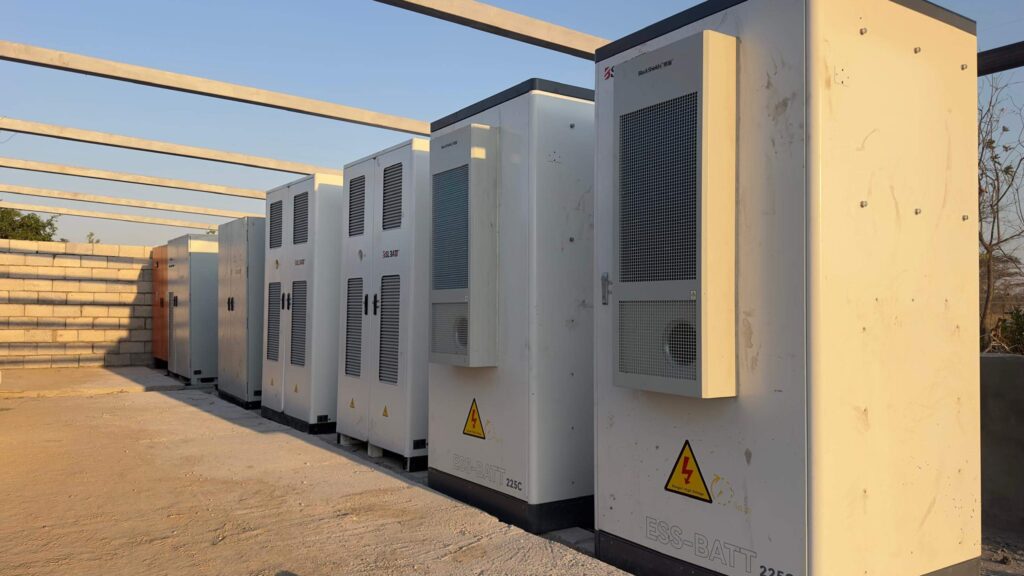
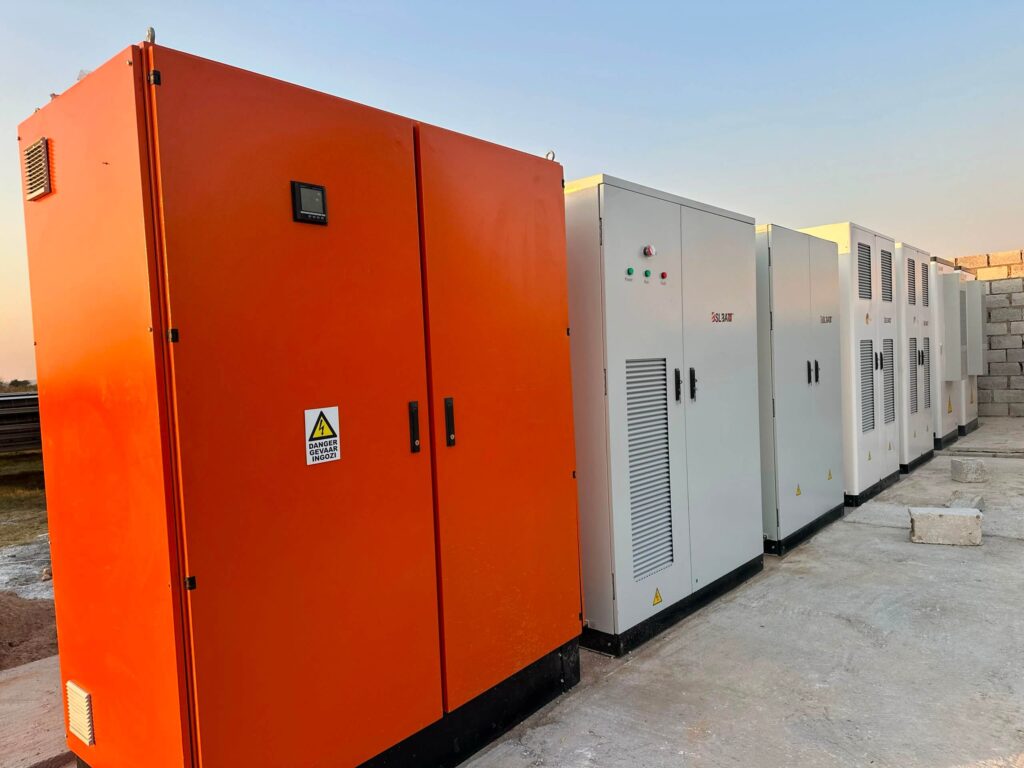
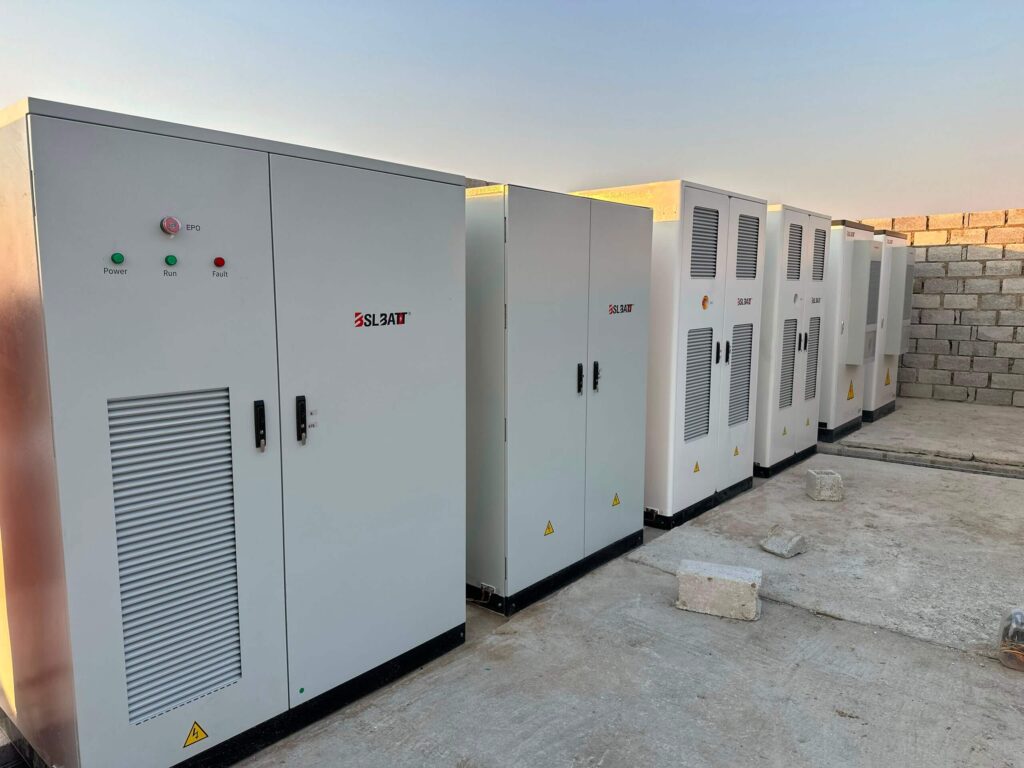
| Battery Energy Storage | 450 kWh (BSLBATT FlexiO, modular cabinets) |
| Power Conversion System (PCS) | 750 kW |
| DC/DC Conversion | 500 kW |
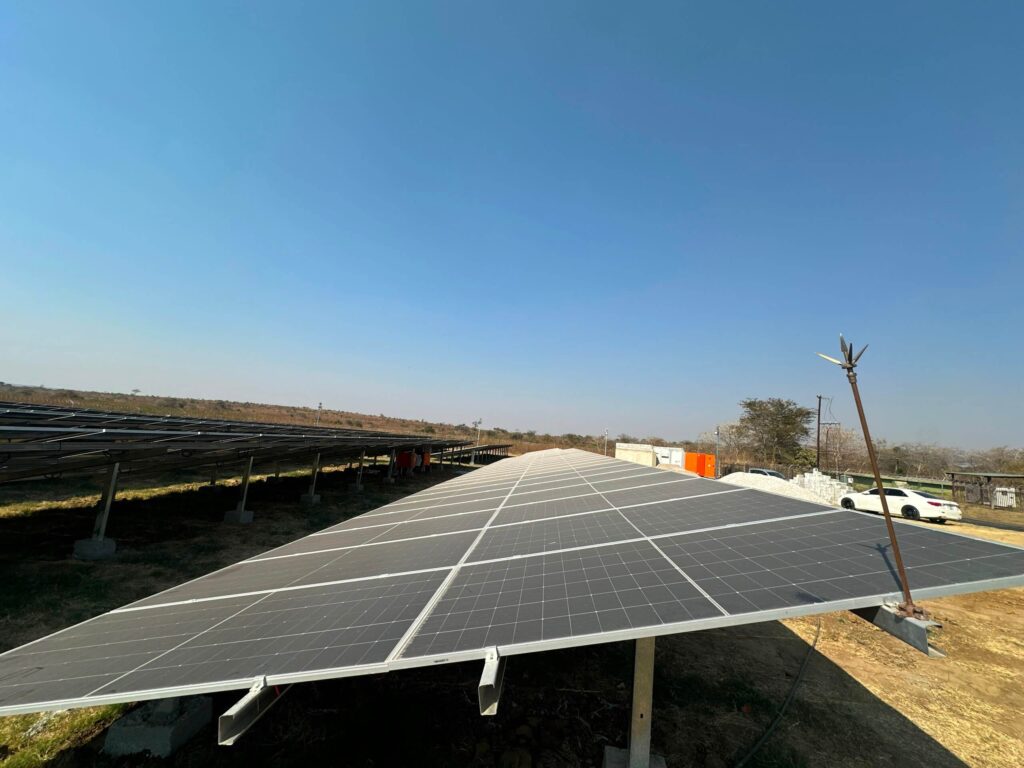
| Solar PV Array | 945 panels x 585 W = 552.825 kWp installed |
| Grid Connection | Retained utility grid connection with export capability |
| Sites | Mungwi and Sopelo — identical architecture, deployed independently |
Engineering Approach
The system was designed around three power sources: solar PV, battery storage and the utility grid. The PCS prioritises solar power for the pump load, then charges the battery with any surplus energy before exporting the excess to the grid. The battery or grid supplies any shortfall to maintain stable pump operation.
Each site uses a 750 kW PCS and 500 kW DC/DC converter with a 552.825 kWp PV array. The 450 kWh battery uses modular cabinets that can be isolated individually for maintenance.
Grid export metering and protection were designed to meet utility requirements, with the PCS managing synchronisation and anti-islanding protection.
Expected Operational Benefits
- Reduced reliance on grid energy for daytime pumping.
- Stable pump operation during short-term solar fluctuations.
- Increased use of solar generation through grid export.
- Improved continuity of the water supply from Mungwi to Sopelo.
Delivery Team
Get Off Grid supplied the BSLBATT ESS-Grid FlexiO battery and power conversion platform, supported by product configuration guidance, local engineering support and after-sales technical assistance.
The project owner managed the overall development, while the EPC contractor was responsible for engineering, installation, commissioning and grid interconnection at both sites.
Lessons & Transferable Insights
The L85 project demonstrates how the FlexiO can be used for grid-tied applications where battery storage is primarily required for stability rather than extended backup.
Its modular design also allows the system to be expanded as the site’s energy requirements change. The current 450 kWh system can be scaled up to a 5 MWh system, providing sufficient storage to support a future transition to off-grid operation if required.
This gives the project flexibility to increase energy storage capacity over time, without replacing the existing system.